

Five Points has its share of century-old charm, yet even a historic Huntsville neighborhood can hide modern hazards. When the call came about a Bradford Pear stump that refused to leave a homeowner’s backyard, we knew the job would test both patience and horsepower. Stallworth’s Tree Service Huntsville has built a reputation for finishing what storms, saws, and time start—so a stubborn stump was right up our alley.
Why This Stump Grinding Challenge Mattered
Setting the Scene in Five Points Neighborhood
Shady sidewalks, tidy bungalows, and a view of nearby museums give Five Points its friendly vibe. In one of those yards sat the leftovers of a tree felled years earlier—now a jagged throne of roots, more than two feet across. Kids tripped over it; lawnmowers rattled against it; the homeowner fretted that pests would burrow beneath it. Every day it lingered, the yard felt a bit smaller. That emotional weight is what turned a routine grind into a mission.
Hazards of Neglected Bradford Pear Stumps
- Dense, interwoven fibers that dull blades fast
- Deep lateral roots that tangle around buried utilities
- Trip hazards for pets and children
- Potential nesting ground for termites and carpenter ants
Leaving a stump alone might seem cheaper, yet hidden costs in safety, resale value, and yard health pile up quickly. Every week of delay chips away at peace of mind.
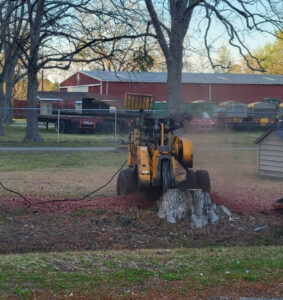
Our Tree Service Company Strategy on Site
Gear That Makes or Breaks a Stump Job
A high-torque, remote-controlled grinder formed the backbone of our plan. Twin hydraulic wheels gave it bite; the wireless control let our crew steer clear of flying chips. Protective mats shielded a nearby utility trailer and a beloved dog house, because no grind is worth a dent in the customer’s weekend projects.
Step-by-Step Grinding Workflow
- Map the root flare and mark underground lines.
- Angle the grinder head to tackle the widest diameter first.
- Work in shallow passes, never forcing the wheel—heat is the enemy of steel.
- Rake mulch away after each sweep to monitor depth and prevent clogging.
- Finish eight inches below grade, then feather the soil for reseeding.
Team Voices From the Yard
Employee: “Most species give up after two passes. This Bradford Pear laughed until the sixth. Good thing the grinder didn’t.”
Owner (David Hogg): “Gear matters, but attitude wins jobs. We budget extra time on dense wood, so the client never pays for surprise delays.”
Delivering Lasting Tree Care Results
Client and Crew Reflections
Homeowner: “I looked out the window, expecting half a stump left. Nothing. It’s like the yard rewound ten years.” That instant relief illustrates why thorough tree care goes beyond sawdust. Removing every root knob prevents suckering and lets new grass germinate without fighting for space.
What Comes Next for Safer Yards
A level patch of mulch now replaces the rotten crown of that stump. Seed and straw will settle in next week, then the family’s Labrador can sprint without tripping. We left a short after-care sheet that recommends:
- Adding topsoil if settling occurs over winter
- Watering new turf lightly for thirty days
- Scheduling annual tree service checkups to spot hidden root issues
Key Takeaways for Homeowners
Choosing a skilled tree company saves time, tools, and turf. DIY grinders often stall on hardwood like Bradford Pear, and surface-level work invites regrowth. A professional grind penetrates deep enough to stop that cycle for good.
In the end, our crew didn’t just remove wood—we restored freedom of movement in a cherished backyard. The sight of fresh earth where a hulking stump once stood reminds us why honest, customer-focused tree service will always matter more than the machine itself. Tomorrow’s schedule holds another challenge, yet today’s victory echoes with spinning teeth, patient hands, and a client’s relieved smile.
Gallery


Recent Posts
-

Scarlet Oak Tree Trimming Service in Madison, AL
May 20, 2025 -

Emergency Tree Removal Near Power Lines in Harvest
Apr 23, 2025 -

Tree Service Company: Oak Limb Cut in Huntsville, AL
Apr 18, 2025


Comments: